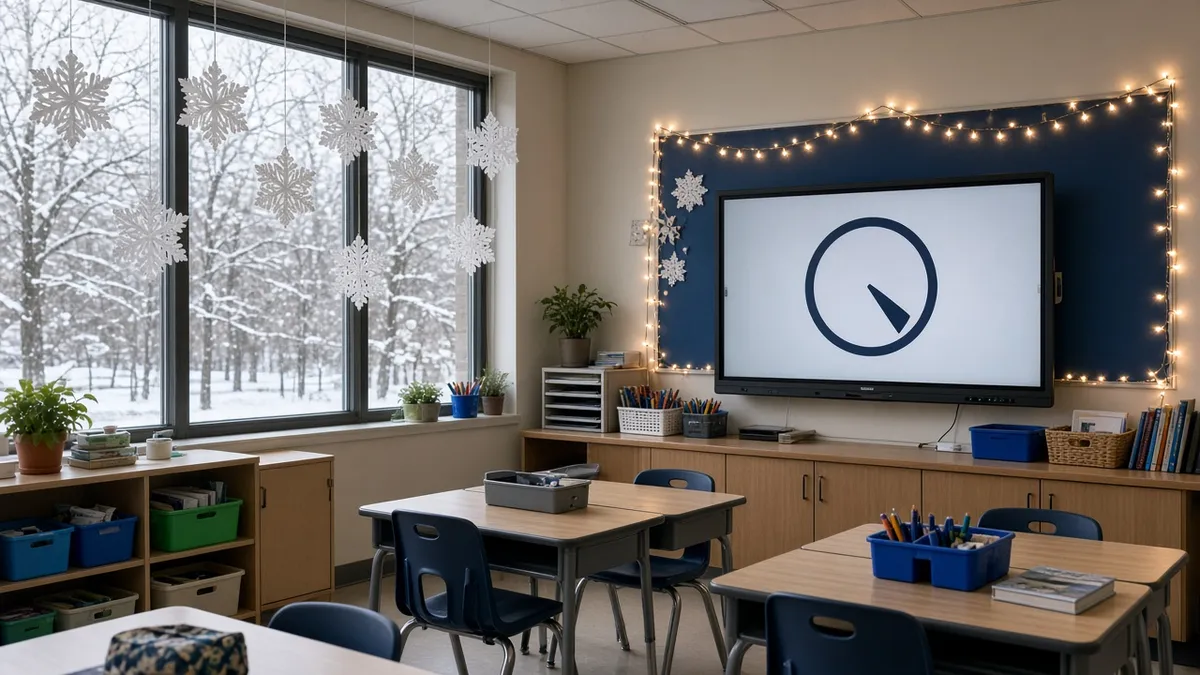
A winter break countdown works when it gives students something small to look forward to each day without turning the last two weeks into a party. The simplest version is a big "days until break" number on the class screen, updated each morning, paired with one short daily activity that still has a learning purpose. Below are 15 low-prep countdown ideas, a ready 10-day plan and tips for keeping routines steady while excitement builds.
Break dates vary by district, so start from your own school calendar. In 2026 Christmas Day falls on a Friday, so many schools will finish in the week before or on Friday 18 December.
Why a countdown helps (and when it backfires)
The days before a long break are hard for many students. Routines loosen, schedules change for assemblies and concerts, and not every child is looking forward to time away from school. A countdown makes the days predictable. Each morning students know what is coming, which reduces "are we doing anything fun today?" questions.
It backfires when every day is a reward that depends on behavior, or when each reveal is a sugar-and-movie event. Keep the activities short, keep the regular schedule, and make sure nothing depends on celebrating a specific holiday. For holiday-themed ideas that include every family, see our winter holiday classroom activities.
How to show the countdown on the class screen
- Put the number up big. Use the text widget for "8 school days until winter break" and update it each morning. Count school days, not calendar days, so the number matches what students experience.
- Add today's reveal under the number: "Today: brain-break bingo after math."
- Keep the rest of the board normal. The day's schedule, a classroom timer for work blocks and your usual voice level on the traffic light.
- Make the update a job. A student helper can reveal the new number each morning.
If your board already has a morning layout, add the countdown to it. Our morning meeting screen template has room for a one-line message.
15 winter break countdown ideas
Each idea takes ten minutes or less and fits around normal lessons.
Low-key daily reveals
- Paper chain. One loop per school day; a student removes one each morning. A classic for younger grades.
- Mystery envelope. Number envelopes by day, each with a small activity card inside.
- Countdown letters. Each day reveals one letter of a hidden phrase, such as "SEE YOU SOON", which students guess at the end.
- Read-aloud chapter. Count down with one chapter of a short book each day, finishing on the last day.
Learning-focused activities
- Math of the day. "If break is 8 days away, how many hours is that? Minutes?" Older students can work out school hours only.
- Vocabulary snowball. Students write one word from the unit on paper, crumple it and toss; each picks one up and uses it in a sentence.
- Review game. A ten-minute review with the scoreboard for teams. Our classroom games post has formats.
- Quick poll. "Which unit this term was hardest?" with the live poll, then talk about what helped.
- Gratitude note. Students write one thank-you note to a school staff member. See gratitude classroom activities.
Movement and calm
- Brain-break reveal. Draw a movement break with the random name picker loaded with activity names. More in no-prep brain breaks.
- Calm corner minute. One minute of breathing with a calm screen; see our classroom screensaver ideas.
- Indoor recess pick. On cold or wet days, let the class vote on an indoor recess game.
Community and reflection
- Compliment circle. A student draws a classmate's name and gives one specific compliment.
- Goal for January. Students write one goal for the new year in school, sealed in an envelope you hand back in January.
- Class memory board. Each day add one favorite moment from the term to a shared slide.
A ready 10-day countdown plan
Use this as a starting point. Each activity runs about ten minutes.
| Days left | Reveal | Purpose |
|---|---|---|
| 10 | Paper chain and countdown on screen | Set the routine |
| 9 | Math of the day | Practice |
| 8 | Brain-break reveal | Movement |
| 7 | Vocabulary snowball | Review |
| 6 | Gratitude note to a staff member | Kindness |
| 5 | Review game with the scoreboard | Review |
| 4 | Quick poll on the term | Reflection |
| 3 | Goal for January | Reflection |
| 2 | Compliment circle | Community |
| 1 | Class memory board and finish the read-aloud | Closure |
Shorter break? Start at 5 and keep the last five rows.
Keeping routines steady before break
- Keep the schedule visible. Changes for concerts or assemblies are easier when students can see them. A visual timetable helps.
- Hold normal expectations. Use the noise meter and voice levels exactly as you do in October. Our noise meter strategies work well here.
- Make transitions timed. The last weeks have more interruptions, so a visible timer for each switch keeps time from leaking. See classroom transitions with timers.
- Plan a calm last day. Clean desks, take home work, finish the read-aloud and do the memory board. A predictable end is calmer than a surprise party.
- Remember not everyone is excited. For some students, break means less food, less structure or a hard home situation. Keep the language neutral ("time away from school") and avoid asking students to share holiday plans or gifts.
A calm last-day plan
The last day before break is often the hardest to run. A plan on the screen helps. Here is a simple shape for an elementary day; adjust times to your schedule.
| Time | Activity |
|---|---|
| Morning | Final countdown reveal: "0 days" and the memory board |
| Block 1 | Short review game or a regular lesson with a shorter work time |
| Block 2 | Clean-out: desks, cubbies and take-home folders, with a timer for each step |
| After lunch | Finish the read-aloud and hand out January goal envelopes to keep at school |
| End of day | Compliment circle and a calm dismissal routine |
Keep the visible timer running through clean-out. "Five minutes to empty your desk" is much easier to follow when students can see the minutes count down. A random name picker can choose who leads each step, which avoids arguments over jobs.
Countdown ideas for high school
Teenagers rarely want paper chains, but a light countdown still helps with focus in the run-up to exams or end-of-term projects.
- Days-left line in the corner of the daily board, next to the agenda and any deadlines.
- Deadline countdown. Show the days left until a project or exam rather than until break, so the number has a purpose.
- Review sprint. One ten-minute review activity a day, with teams on the scoreboard.
- Reflection on the last day. One question: what is one thing you want to do better next term?
Our high school classroom screen page has block-period layouts with room for a countdown line.
Reveal card ideas for mystery envelopes
If you use the mystery-envelope format, here are quick cards to fill them with. Each one takes a few minutes.
- Two-minute dance or stretch break
- Read-aloud outside the usual time
- Draw a picture of your favorite moment this term
- Teach the class a game from your family or culture (optional, volunteers only)
- Write a kind note to a classmate
- Silent reading with a calm screen and soft lighting
- Class vote on tomorrow's brain break
- Quick riddle or brain teaser on the board
Countdown ideas by grade
K-2: paper chains, mystery envelopes and picture-based reveals. Keep reveals the same time every day.
3-5: math of the day, countdown letters and review games. Students can take turns running the reveal.
6-8: quick polls, review tournaments and goal-setting. Middle schoolers often prefer a low-key number in the corner of the screen to a big event. Our middle school classroom screen guide has bell-to-bell layouts that leave room for it.
After break: count back in
The countdown can flip into a welcome-back routine in January. Put the January goal envelopes on the desks and the first-day schedule on screen so students know what to expect. A clear first morning back sets the tone for the rest of winter.
A note on fairness and inclusion
Not every family celebrates the same holidays, and some celebrate none. Keep the countdown about the break itself, not a single holiday, and keep treats optional and allergy-aware if you include them at all. Activities that rely on buying something, such as gift swaps, can leave some students out; a class memory board or compliment circle costs nothing and includes everyone.