Gratitude classroom activities work best when they are short, regular and visible: a two-minute prompt on the board, a shared class list that grows all month, or a quick thank-you note at the end of the day. This guide gives you seven gratitude activities for K-8 that you can run from one screen, with prompts, timings and the board tools that keep each one moving.
November is the natural month for this, with Thanksgiving on 26 November 2026, but none of these ideas depend on the holiday. They work just as well in January, when a class needs a reset, or at the end of the year. Open your free classroom screen and you can set up every activity below in a few minutes.
Why gratitude activities fit the classroom
Gratitude activities give students a simple, repeatable way to notice good things and say thank you. In practice, teachers use them to:
- start the day on a calm, positive note,
- build classroom community and kind language,
- give quieter students a low-pressure way to share,
- practice writing in short, purposeful pieces.
Keep the tone light. Students should never feel they have to share something personal, and "I'm grateful for lunch" is a perfectly good answer. The goal is a habit, not a confession.
1. Gratitude prompt of the day
Time: 2 to 5 minutes · Grades: K-8 · Tools: text widget, classroom timer
Put one prompt on the board as students arrive, with a three-minute timer. Students write or draw a short answer in a notebook, then two or three volunteers share.
Prompts that work well:
- Name one person at school who helped you this week.
- What is something you can do now that you could not do last year?
- What is a small thing that made you smile today?
- Which object in this room would you miss most if it disappeared?
- Who is someone you have never thanked, and what would you say?
Rotate prompts daily so the routine stays fresh. Younger students can draw instead of write.
2. The gratitude wheel
Time: 5 minutes · Grades: K-5 · Tool: wheel spinner
Load the wheel with categories instead of questions: a person, a place, a food, a sound, a skill, a memory, something in nature, something at school. Spin once, and every student names one thing in that category they are grateful for.
The spin adds suspense, and categories make it easier for students who freeze when asked an open question. Turn on remove-after-spin so the class gets a new category each day of the week.
3. Class gratitude chain
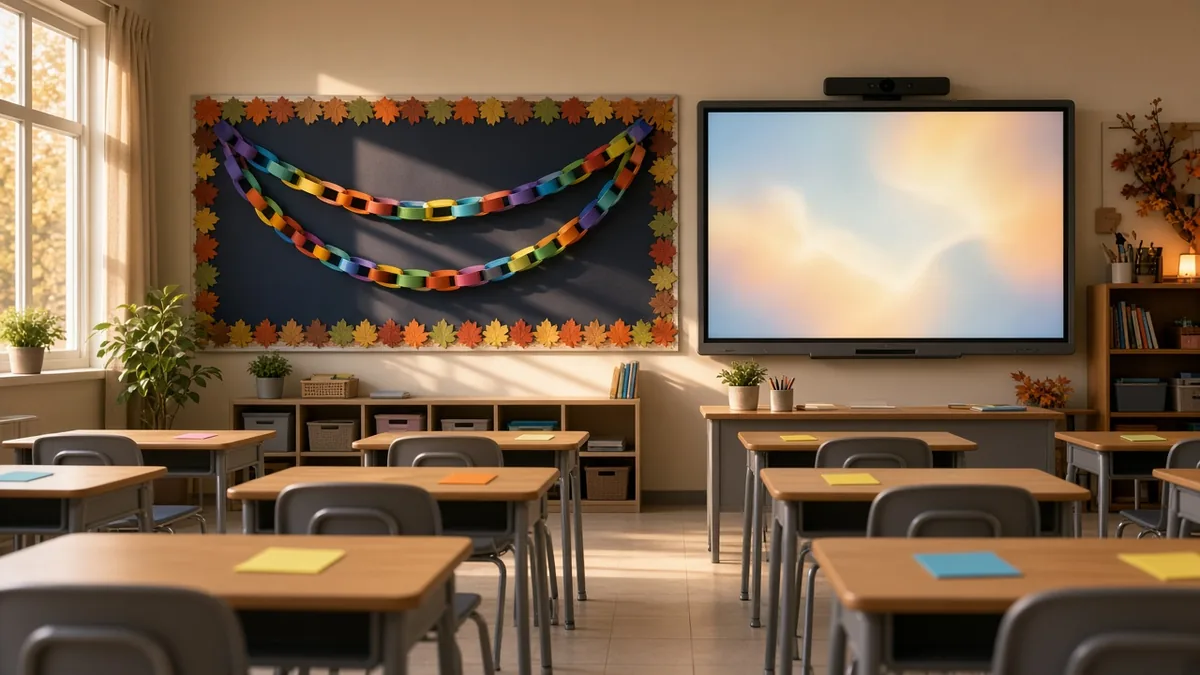
Time: 5 minutes a day across November · Grades: K-5 · Tools: paper strips plus a counter on screen
Each day, every student writes one thing they are thankful for on a paper strip, and the class adds the strips to one long chain. Put a running total on the board with a text widget: "Our chain has 236 links."
By Thanksgiving week, a class of 25 writing one strip on each school day in November will have several hundred links. Hang it around the room. It is a visible record of the month, and children love measuring it.
4. Thank-you notes with a purpose
Time: 15 to 20 minutes · Grades: 2-8 · Tools: timer, random name picker
Show a simple four-part note frame on the board:
- Dear ______,
- Thank you for ______.
- It helped me because ______.
- From ______
Students write to someone in the school community: a custodian, cafeteria worker, bus driver, librarian or another teacher. Use the random name picker to choose who delivers the notes. Older students can write to someone outside school and take the note home.
This doubles as a writing lesson in audience and purpose. A note to the principal sounds different from a note to a friend.
5. Gratitude exit ticket
Time: 2 minutes · Grades: 3-8 · Tool: exit ticket
At the end of the lesson, ask one question: "What is one thing from today's class you are glad you learned?" Students answer on a sticky note or in a digital exit ticket.
It is the fastest activity on this list and gives you useful feedback at the same time. Answers that mention a classmate's explanation or a group task tell you which parts of the lesson landed.
6. Gratitude poll
Time: 5 minutes · Grades: 3-8 · Tool: live poll
Run a light poll with four options, such as "What are you most grateful for this week? Free time / Friends / Family / Food". Show the results on the board and ask a few students to explain their choice.
Polls work well with older students who are less keen to share out loud. Everyone takes part, and the discussion starts from the class results rather than from one person's answer.
7. Gratitude gallery walk
Time: 20 minutes · Grades: 4-8 · Tools: timer, chart paper
Put five sheets of chart paper around the room, each with one heading: people, places, experiences, things, abilities. Groups rotate every three minutes, adding ideas to each sheet. Put a visible timer on the screen and use the group maker to set the groups.
Finish with a short discussion: which sheet filled up fastest, and why? Students often notice that people and experiences come up more than things.
Gratitude across the curriculum
Gratitude does not need its own lesson slot. It fits into the subjects you already teach, which makes it easier to keep going.
- Math. Count the links in the gratitude chain each Friday and graph the total. Older students can work out the average number of links per school day or predict the length by Thanksgiving.
- English language arts. Write gratitude acrostic poems, using the letters of a word such as THANKS or a classmate's name. Older students can write a short persuasive paragraph on "the most underrated job in our school".
- Science. Ask students to thank an invention: what would the day look like without electricity, clean water or the refrigerator? It is a quick way to talk about how discoveries change daily life.
- Social studies. Look at how different communities and cultures give thanks, such as harvest festivals around the world, and compare what they have in common.
- Art. Make a "gratitude tree" on a bulletin board, with one paper leaf for each student's answer.
Keep the kindness going with our winter holiday classroom activities.
Put the subject link on the board as part of the prompt, for example "Math gratitude: our chain grew by 48 links this week. How many per day?"
A gratitude journal for older students
For grades 5 to 8, a short weekly journal builds the habit without taking much time. Once a week, give students five minutes and a simple frame on the screen:
- Three good things that happened this week.
- One person who made the week better, and how.
- One thing I am looking forward to.
Keep journals private unless a student chooses to share. At the end of the month, students can reread their entries and notice patterns, which often makes a good reflective writing task.
Gratitude activities by grade
| Grade | Best fit | Why |
|---|---|---|
| K-2 | Prompt of the day (draw), gratitude wheel, gratitude chain | Short, visual and repeatable |
| 3-5 | Wheel, chain, thank-you notes | Builds writing with a real reader |
| 6-8 | Exit ticket, poll, gallery walk, notes | Lower pressure, more discussion |
A one-week gratitude plan
| Day | Activity | Time |
|---|---|---|
| Monday | Prompt of the day | 5 min |
| Tuesday | Gratitude wheel | 5 min |
| Wednesday | Thank-you notes | 20 min |
| Thursday | Gratitude poll | 5 min |
| Friday | Gallery walk or chain count | 15-20 min |
Use the plan for the week before Thanksgiving, or repeat it across November with new prompts each week.
Tips for running gratitude activities well
- Model first. Share your own short answer before asking students for theirs.
- Make sharing optional. Writing can stay private; only volunteers share aloud.
- Accept simple answers. "My dog" counts. Depth comes with practice.
- Be sensitive to home situations. Avoid prompts that assume a particular family, holiday or home life. "Someone who helped you" is safer than "your family".
- Keep it short. Two to five minutes a day beats a long session once a month.
- Put it on the screen. A visible prompt and timer make the routine run itself, even with a substitute.
How gratitude fits other November themes
Gratitude pairs naturally with the other things on a November calendar. World Kindness Day is on 13 November, and our World Kindness Day classroom activities turn thank-you notes into acts of kindness. For holiday-specific ideas, see our Thanksgiving classroom activities. If you run a daily circle, add a gratitude prompt to your morning meeting screen.