When educators, students, and practitioners explore structured approaches to sound management, establishing an effective quiet monitor recipe is one of the most reliable methods to maintain classroom productivity. Developing an intuitive quiet monitor recipe removes uncertainty from daily routines, fosters emotional regulation, and provides learners with immediate visual feedback regarding ambient room volume.
For verified academic frameworks on behavioral support and learning space acoustic guidelines, consult the comprehensive documentation provided by Edutopia Classroom Management Research. To test and fine-tune your visual decibel meters in real time, explore our MyClassScreen free classroom noise tools.
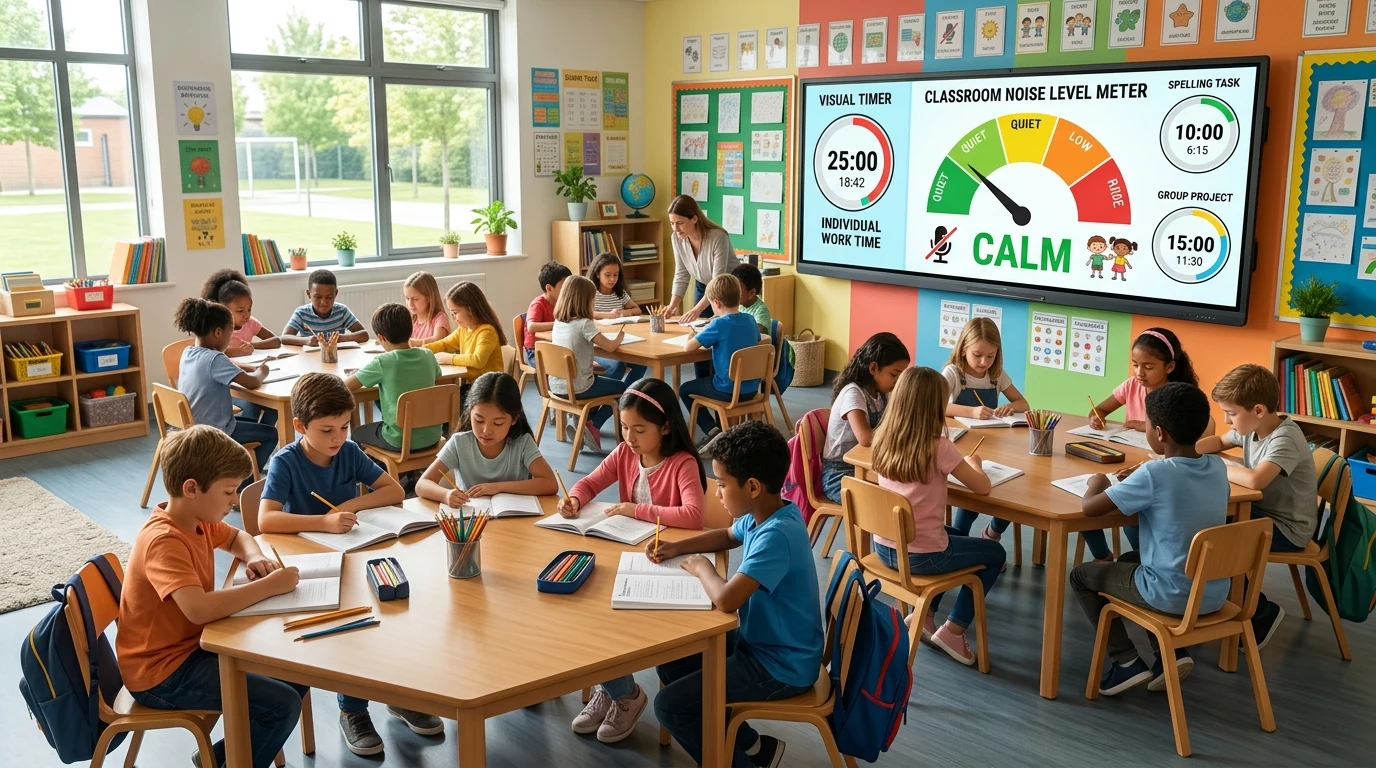
Understanding What a quiet monitor recipe Accomplishes
At its core, a this methodology is a deliberate combination of hardware microphone settings, visual sensitivity thresholds, and classroom expectations designed to maintain an optimal acoustic environment. Traditional classroom management often relies on repetitive teacher interventions, such as shushing students or raising one's voice over rising chatter. In contrast, an intentional this methodology delegates sound monitoring to an objective visual tool, allowing students to self-correct in real time.
Modern digital classroom screens feature noise meter widgets that capture ambient decibels through a connected computer microphone. However, without a calibrated this methodology, these tools can quickly lose effectiveness. If the sensitivity is set too high, ambient air conditioning or shuffling notebook paper triggers false alarms, causing student apathy. If the threshold is set too low, disruptive noise levels go unnoticed. Selecting the proper this methodology balances these variables for steady classroom harmony.
Educational researchers emphasize that acoustic comfort directly influences reading comprehension, working memory, and student stress levels. By introducing a structured this methodology, teachers create a predictable sensory boundary. Students understand precisely what volume level is expected during individual reading, collaborative group work, or classroom transitions, fostering shared responsibility for learning space noise.
Hardware Microphone Calibration for Your quiet monitor recipe
The foundation of any successful this methodology begins with hardware selection and physical positioning. Most laptops come equipped with internal omnidirectional microphones. While convenient, internal mics frequently pick up fan hum, keyboard clicks, and desktop vibrations. For an optimal this methodology, an external USB microphone positioned central to student seating provides a significantly more accurate acoustic profile.
Before launching your sound meter widget, access your operating system audio settings. Set the primary input gain between 40% and 55% rather than maximum capacity. Testing your this methodology with a balanced input gain ensures that sudden spikes, such as dropped textbooks or chair scrapes, do not immediately max out the visual meter. Consistent input gain makes your visual noise indicator reliable across varying class periods.
Furthermore, consider room acoustics when deploying your this methodology. Classrooms with tile floors and uncarpeted walls produce substantial reverberation, which artificially inflates decibel measurements. Adjusting the damping coefficient within your this methodology compensates for acoustic bounce, ensuring the visual feedback accurately reflects human vocal energy rather than physical room echo.
The 7 Core Ingredients of an Effective quiet monitor recipe
Developing a premier this methodology requires balancing seven vital components: baseline noise measurement, progressive visual cues, microphone sensitivity tuning, auditory buffer thresholds, student co-designed rules, positive reinforcement timers, and routine calibration cycles. When these elements operate together within your this methodology, sound management transitions from an adversarial chore into an engaging community routine.
Ingredient one in our this methodology is the baseline room survey. Conduct a silent two-minute test while students are seated quietly. This measures the natural background noise of your ventilation system, nearby hallways, and ambient equipment. Incorporating this baseline into your this methodology guarantees that normal classroom breathing never registers as elevated noise.
Ingredient two centers on progressive visual feedback. Rather than a binary quiet-or-loud display, an effective this methodology utilizes gradual color transitions—such as shifting from emerald green to amber yellow before reaching crimson alert. This visual gradient in your this methodology gives students a warning buffer to lower their vocal volume before any classroom consequence or bell triggers.
Calibrating Thresholds for Group Work vs Independent Study
A single static volume threshold cannot govern an entire school day; different instructional formats demand distinct acoustic parameters within your this methodology. During silent reading, independent writing, or standardized assessments, your this methodology should reflect a low decibel ceiling, typically between 38 dB and 45 dB. At this level, students recognize that whispering represents the maximum permissible sound.
Conversely, during collaborative science labs or literature circles, a rigid whisper expectation stifles productive discourse. For these cooperative learning sessions, adjust your this methodology to an active dialogue range between 55 dB and 68 dB. A flexible this methodology accommodates enthusiastic intellectual engagement while still preventing conversational escalation into rowdy shouting.
Teachers should visibly announce threshold changes whenever instruction shifts. Displaying the current this methodology mode on the main interactive whiteboard helps students reset their internal volume gauges. This transparent communication reinforces that your this methodology is not punitive, but rather a responsive tool tailored to their current learning objective.
Gamifying Sound Awareness with Your quiet monitor recipe
One of the most transformative aspects of an advanced this methodology is its capacity for student gamification. Rather than viewing noise control as an imposition, students rally around collaborative goals when visual timers track how long the class maintains an unbroken green status. Integrating challenge timers into your this methodology transforms auditory discipline into an exciting group accomplishment.
For elementary and middle school grades, consider pairing your this methodology with visual reward tokens or digital streak counters. If the room sustains the calibrated this methodology parameters for twenty uninterrupted minutes, students earn a collaborative break, a student-selected musical cooldown, or bonus points toward a classroom privilege. Shared goals eliminate peer scapegoating and incentivize mutual accountability.
In secondary classrooms, gamification can take the form of acoustic self-regulation analytics. Reviewing average volume levels captured by your this methodology across different blocks encourages high school learners to reflect on how noise patterns influence their focus and task completion efficiency. This metacognitive dimension elevates your this methodology beyond mere behavior management.
Troubleshooting False Alarms in Your quiet monitor recipe
Even the most thoughtfully prepared quiet monitor recipe occasionally experiences technical challenges or false triggers. The most common pitfall involves microphone proximity to localized noise sources, such as a humming computer projector or an open exterior window. If your quiet monitor recipe constantly signals amber alerts while students are silent, check peripheral noise inputs immediately.
Another frequent challenge in maintaining a quiet monitor recipe is the sensitivity bounce caused by sudden isolated noises, such as a sneeze or dropped pencil case. To resolve this, ensure your software tool supports latency smoothing. A smooth quiet monitor recipe averages decibel readings over a three-to-five second rolling window, preventing transient acoustic spikes from disrupting the entire class.
Additionally, examine your web browser permissions and audio driver settings. Operating system updates can inadvertently reset default microphone input volumes, altering the baseline of your quiet monitor recipe overnight. Performing a quick thirty-second morning sound check guarantees that your quiet monitor recipe behaves predictably throughout every teaching period.
Integrating Visual Cues and Traffic Lights with the Recipe
A high-impact quiet monitor recipe works best when paired with supplementary visual signals, such as digital traffic lights or instructional work-symbol cards. While the sound meter displays real-time decibel fluctuation, a synchronized traffic light icon within your quiet monitor recipe confirms whether the current expectation is absolute silence, whisper pairs, or open group discussion.
Visual learners, including English language learners and neurodivergent students, benefit enormously from multi-modal cues embedded in your quiet monitor recipe. When a student glances at the classroom screen, seeing both the numeric decibel gauge and a universally recognized color emblem instantly reinforces the acoustic expectation without requiring verbal clarification from the teacher.
Over time, the combined visual cues of your quiet monitor recipe become second nature to the classroom community. Students monitor the screen organically, adjusting their posture, vocal tone, and movement speeds to keep the environment aligned with the active quiet monitor recipe profile.
Long-Term Classroom Culture and Routine Sound Hygiene
Sustaining an acoustic management strategy over an entire academic year requires consistency, student ownership, and intentional habit formation. A well-executed quiet monitor recipe is not merely a temporary software gimmick; it is an enduring behavioral anchor that shapes your classroom culture. When students participate in defining volume expectations, they take genuine pride in maintaining their quiet monitor recipe standards.
Periodically revisit your quiet monitor recipe with your students. Conduct quarterly feedback discussions where classes evaluate whether the current sensitivity thresholds feel fair, motivating, and conducive to deep concentration. Updating your quiet monitor recipe based on student observations reinforces their role as co-creators of their learning sanctuary.
Ultimately, the goal of every quiet monitor recipe is self-regulation. When students graduate to environments without visual noise meters, the acoustic awareness and respect cultivated through your quiet monitor recipe remain with them, helping them navigate collaborative workspaces and scholarly environments with confidence.
Frequently Asked Questions
What makes a quiet monitor recipe effective for diverse age groups?
An effective sound management recipe combines objective hardware calibration with clear, age-appropriate visual feedback. For younger learners, playful graphical animations work wonders, while older students respond best to real-time decibel analytics and collaborative work-mode indicators.
Can a sound management recipe work without an expensive external microphone?
Yes, a sound management recipe functions smoothly with standard built-in laptop microphones. The key is adjusting operating system input gain to 40%-50% and utilizing software latency smoothing to filter out isolated desk thumps.
How often should I recalibrate my sound management recipe?
It is best practice to test your quiet monitor recipe once a week or whenever physical classroom layouts change. Adding rugs, repositioning student desks, or opening windows alters room reverberation and baseline acoustics.
What is the ideal decibel threshold for independent study in a quiet monitor recipe?
For independent study or exam conditions, the ideal threshold in your quiet monitor recipe is between 38 dB and 44 dB, which permits gentle page-turning and soft whispers while preventing conversational disruption.
Does using a quiet monitor recipe create classroom anxiety?
When implemented positively with gamified goals and visual buffers, a quiet monitor recipe significantly reduces student stress by eliminating unpredictable verbal scolding and establishing clear, transparent acoustic expectations.