Integrating Social-Emotional Learning (SEL) into your daily routine doesn't require hours of planning. By utilizing an SEL classroom screen, you can turn your projector into a calm, predictable check-in layer that supports student well-being from the moment they walk in. (You can read more about educational technology trends on CASEL).
Table of Contents
- Morning Mood Check-Ins
- Breathing and Regulation Timers
- Community Building with Prompts
- Privacy and Best Practices
Morning Mood Check-Ins
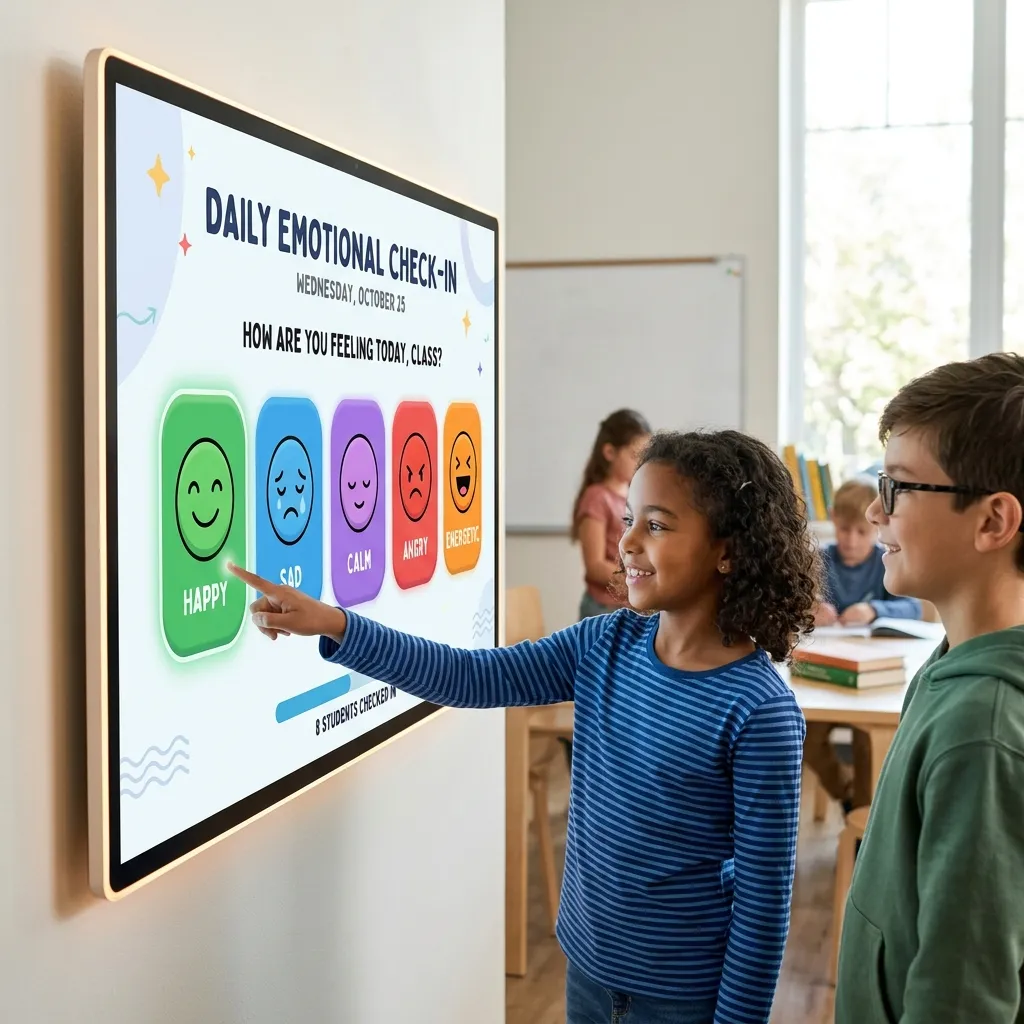
One of the easiest ways to gauge the room's energy is by displaying a simple mood meter or "color check-in" as students enter. A well-designed morning meeting screen template can prompt students to hold up a colored card or simply reflect quietly on how they are feeling. This sets a tone of emotional awareness before academics even begin.
Breathing and Regulation Timers
Transitions can be chaotic. By pairing your standard transition timers with a deep breathing exercise, you give students a moment to regulate their nervous systems. Displaying a visual breathing bubble alongside a 2-minute timer on your MyClassScreen board is a highly effective, low-effort routine.
Community Building with Prompts
SEL isn't just about self-regulation; it's also about relationship skills. Use a random name picker to invite students to share answers to low-stakes community-building questions. If you find the room getting too loud during these shares, a noise meter can gently remind students of the expected volume level, aligning perfectly with PBIS expectations.
Privacy and Best Practices
While an SEL classroom screen is powerful, remember that it is a public display. Avoid collecting sensitive or deeply personal stories on a shared board. Always offer opt-out signals for students who prefer not to share. The goal is to create a welcoming climate, not to force vulnerability.
For more ideas on how to structure your screen without adding stress, explore our guide on no prep brain breaks or review our alternatives hub to find the best tool for your classroom.
Building a Daily SEL Classroom Routine
The key to successful Social-Emotional Learning (SEL) is consistency. Rather than treating SEL as a standalone lesson once a week, the most effective teachers weave it into their daily classroom fabric. This is where digital screen tools shine. By having an emotional check-in widget on the board the moment students walk in, you normalize the process of emotional identification. Over the course of a semester, this simple daily habit significantly reduces behavioral outbursts because students develop the vocabulary and the safe space to articulate their feelings before those feelings escalate into classroom disruptions. Creating this baseline level of trust is the cornerstone of a successful SEL classroom screen strategy.
Frequently Asked Questions About SEL
What are the 5 core competencies of SEL?
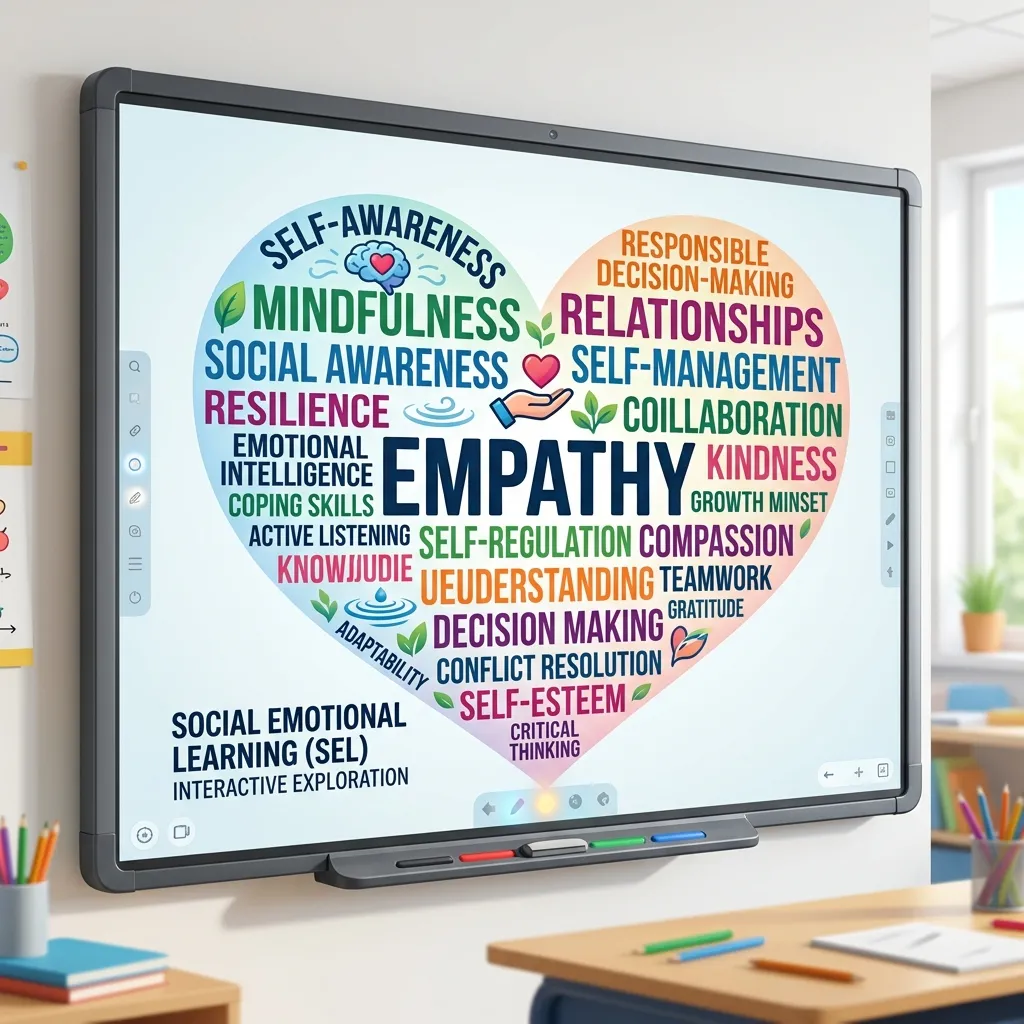
According to CASEL, the five core competencies are self-awareness, self-management, social awareness, relationship skills, and responsible decision-making. Daily screen check-ins primarily target self-awareness and self-management.
How does SEL improve academic performance?
Research consistently shows that students who participate in SEL programs exhibit improved classroom behavior, an increased ability to manage stress, and significantly higher academic achievement scores, as they are emotionally regulated enough to focus on complex learning tasks.